
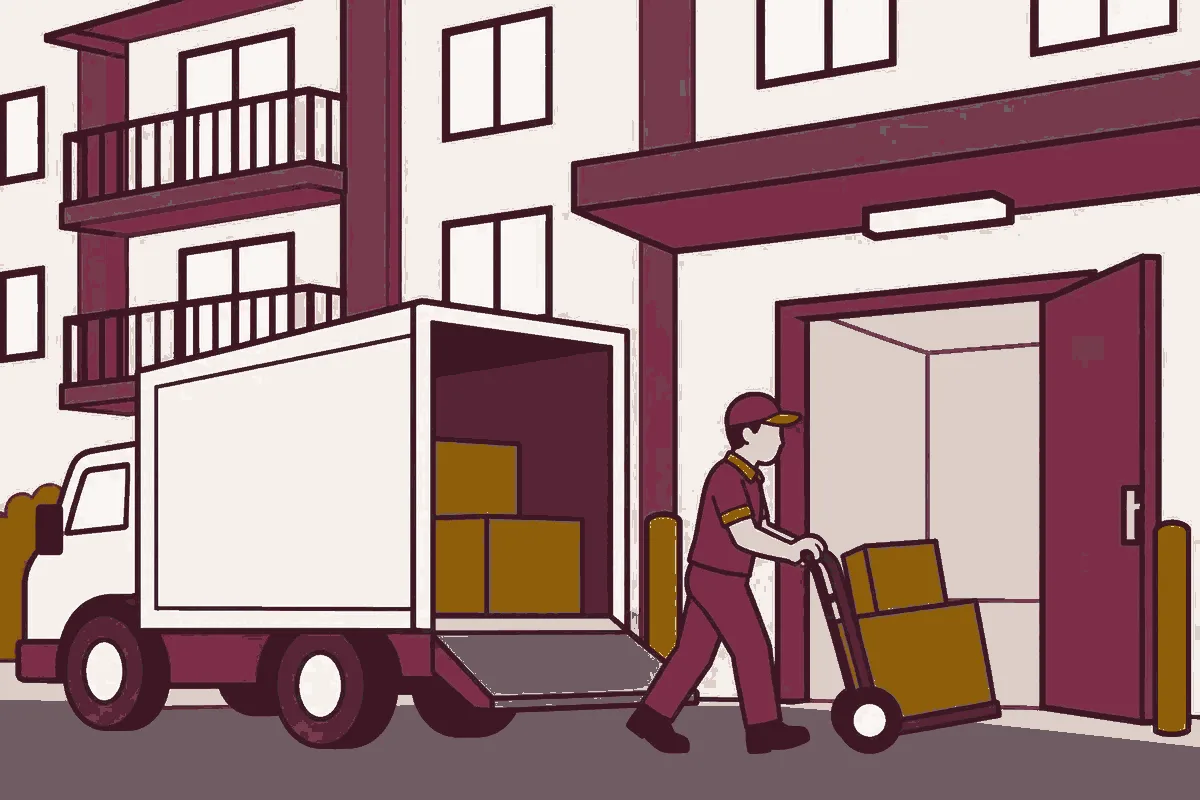
Check your building’s move rules first
Before you measure doorways or pack a single box, call the property office. Apartments run on schedules: loading docks, freight elevators, and service entrances get booked. The manager can tell you which dates are open, what the building expects, and whether your move needs approval.
- Ask whether your move date and time slot need to be reserved in advance.
- Confirm which entrance the moving crew is allowed to use.
- Find out if elevator reservations are handled by the office or by residents.
- Ask about required notice for booking the loading dock or freight elevator.
- Request the building’s rules for floor protection, elevator pads, and hallway clearance.
Write down the answers and keep them with your rental agreement. Building policies can change between tenants, and what worked for your last move may not apply here. A quick conversation now saves you from surprises on the morning of the move.
If your move falls on a busy weekend or month-end, book your time slot as early as possible. In Tucson, apartment calendars fill fastest in August and May, when University of Arizona leases turn over, and around the first and last of the month. Ask the office for the earliest elevator window and book the crew to match.
Check freight elevator windows, stairs, and clearance

Freight elevators may run on set hours, and the time window can be shorter than the move itself. Ask when the elevator is free, then build in extra time for loading and unloading. If the building has a service elevator, confirm whether the crew can use it during the same window.
Stairs matter even when the elevator works. Measure the path from your door to the elevator and from the elevator to the truck. Check door widths, hallway turns, and any steps along the route. A couch that clears one corridor may not clear the next.
Sort out legal parking for the moving truck
A moving truck needs a spot where it can sit for the loading and unloading time without a ticket. Ask the building manager about designated loading zones, and check the street for posted signs and permit rules. In a Tucson summer, shade matters: a spot out of the afternoon sun keeps the crew working faster and protects electronics and candles waiting to be loaded.
Confirm access at the addresses on both ends
The apartment you leave is only half the equation. Confirm who can open the door at the destination, whether there is freight elevator access there, and where the truck can park. A clear loading path at both ends keeps moving day from stalling.
Gather keys, access codes, and move-out photos
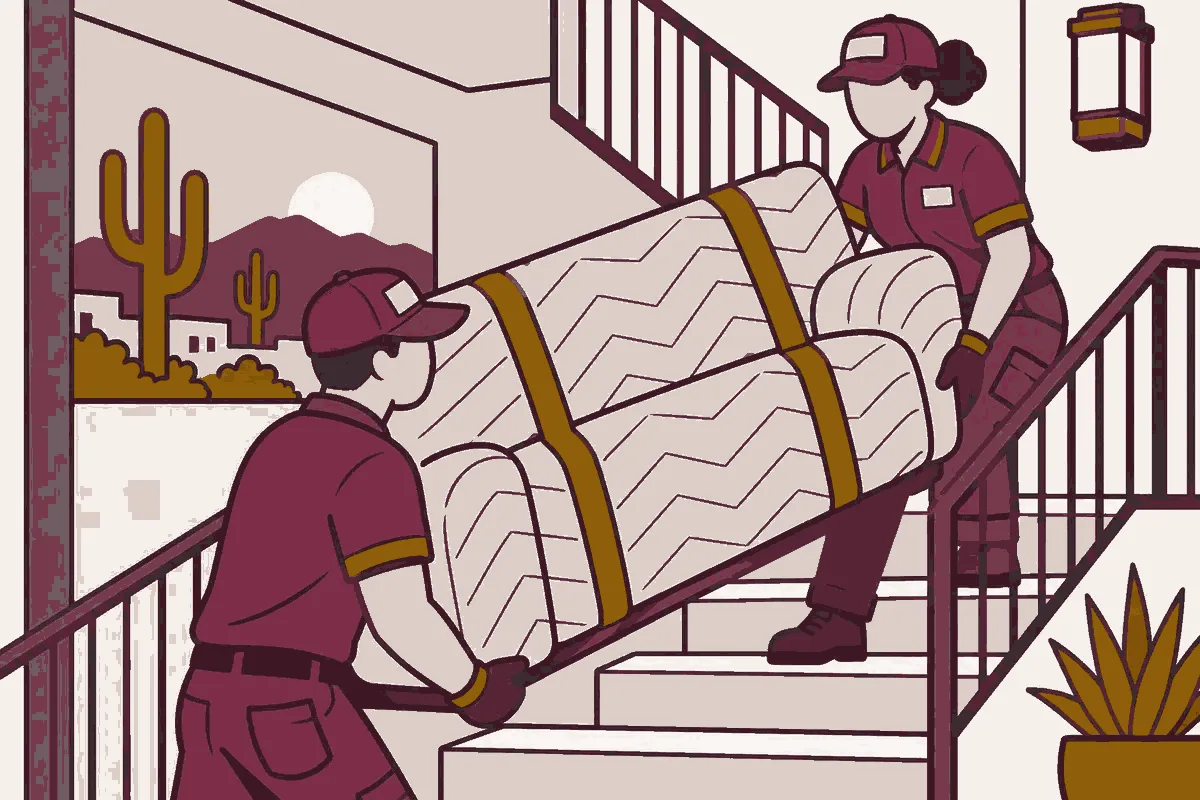
Keep your keys and any fobs, garage remotes, or building codes within reach until the last item is out. Take photos of each room after everything is loaded, including closets and storage spaces, so you have a visual record of the empty apartment.
Leave access information in one place for the crew: which entrance is open, what code unlocks the service door, and who to call if the elevator is not working. Include those notes when you contact us with your move details, especially for buildings near the University of Arizona, where move-out days overlap. A few written instructions prevent a long wait at the lobby.
Example access note to leave for the crew
It helps to write the access details down before moving day, even if you have already explained them over the phone. Keep the note on the kitchen counter and text a copy to the crew. Here is what a practical access note looks like:
- Building entrance: use the south service door on the parking level.
- Freight elevator: reserved from 9 a.m. to 11 a.m.; key is with the manager.
- Stairs: take the first left after the elevator to reach unit 412.
- Truck parking: pull into the loading zone behind the dumpsters.
- Contact: call the property office if the elevator is locked.
- Unit access: door code 2048, lockbox on the patio if the code fails.
Even a short note like this gives the crew what they need to start working without calling you repeatedly. After the move, check the note against the building’s rules one last time before you hand in your keys.
Rental truck or mover’s truck: what changes?
With a rental truck, you handle the driving, loading, and building access, and the truck size depends on what you reserve. With a moving company, the crew arrives with the truck, pads, and dollies, and the hourly rate covers the work, as confirmed in your written estimate. See our apartment moving page for how crews plan around buildings.